
Training Area: Ease – How Stress Can No Longer Affect You
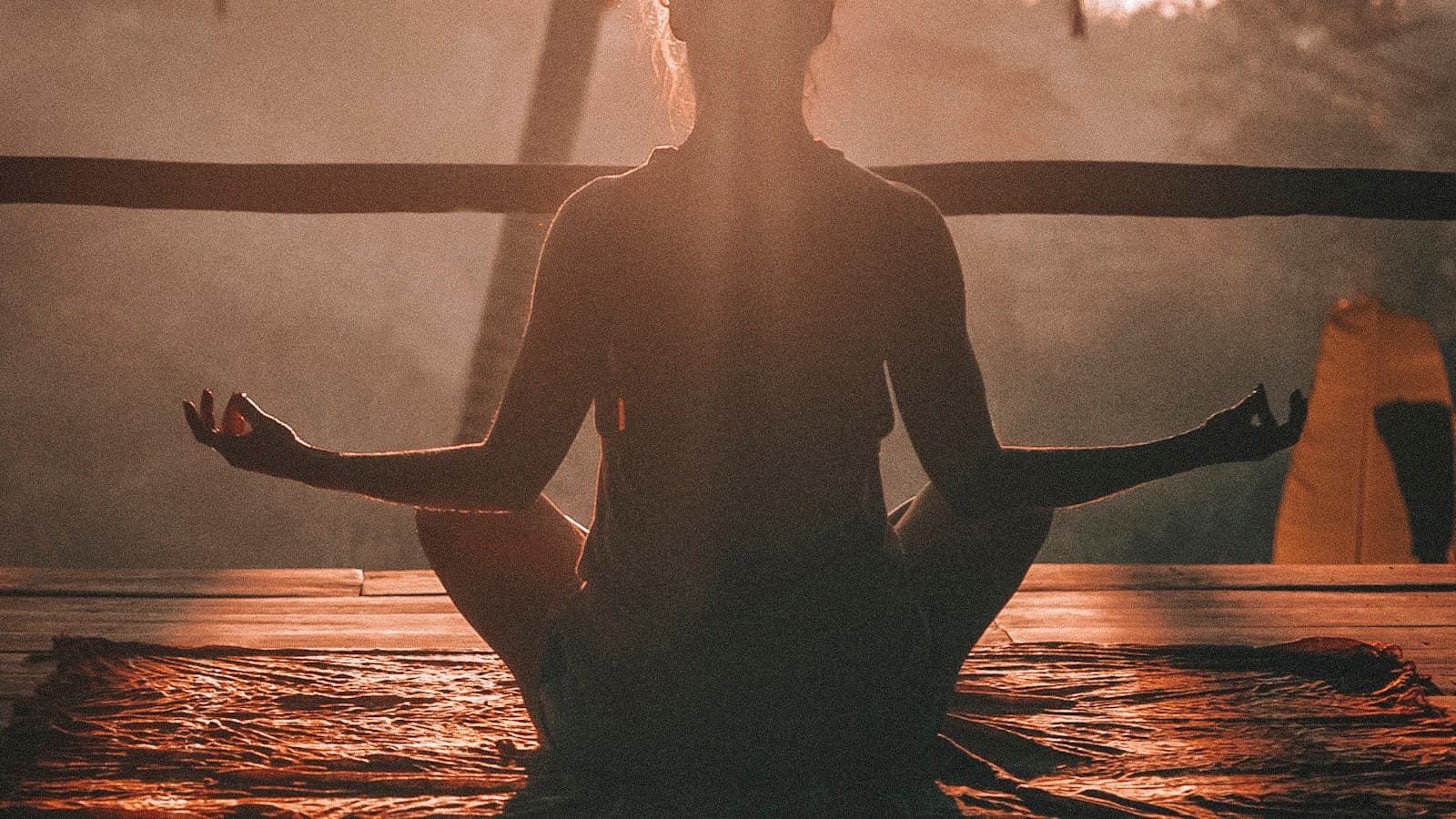
Do you sometimes feel like everything is coming at once and your never-ending to-do list overwhelms you? Are you stressed or afraid of a challenging situation and would rather hide until it's over?
In our hectic daily lives, we often lose our calm and balance – and with it our sense of ease.
How Emotions Influence You
Ease is one of the most important skill areas, alongside focus, optimism, and growth, for getting into flow. In this area, you train emotional regulation, stress management, and emotional intelligence so you can remain fearless and calm even in stressful situations.
Emotions accompany us in every situation, and whether we consciously perceive them or not – they influence our thoughts and actions. When we're in a good mood, calm, and balanced, we're much more likely to take on challenges, become more creative, and grow beyond ourselves.
Psychologist Barbara Fredrickson explains with her "Broaden-and-Build" theory how important positive emotions are. They don't just give you a good feeling, but also fulfill important functions: Positive emotions change your experience and perception, leading you to come up with new ideas and strengthening your relationships. This allows you to develop new skills and resources that you can draw on in the future.
But it's not just positive emotions that influence our thinking and actions. When we lack ease, feelings of stress, overwhelm, and fear get in the way when we face a challenging task.
Your brain does quite a bit of work processing all these emotions! Within milliseconds, it decodes relevant information and passes it on so you can respond immediately to emotional stimuli.
Ease in the Brain
The creation and processing of emotions happens in the limbic system. This includes various brain structures:
The amygdala is the central region for processing emotions. It decodes relevant information within milliseconds and can thereby enable a person to act quickly in dangerous situations. Additionally, the amygdala is involved in storing relevant emotional information.
Directly above the eyes is the orbitofrontal cortex. It lets you recognize whether a situation is currently emotionally and motivationally relevant to you. For example, if you're giving a presentation, you'll evaluate these stimuli as important thanks to your orbitofrontal cortex.
Finally, there's the cingulate cortex, which is responsible for emotional regulation. It also determines how much your current state deviates from your desired state and passes that on to other structures to adjust your behavior.
Why Do We Lose Our Ease?
In the past, it may have been vital for survival to live under constant tension and fear to prepare for dangerous situations. Those who were too relaxed and then surprised by a saber-toothed tiger didn't survive.
Today, no wild animal is waiting for us around the next corner, yet this primal instinct of fear still often makes itself felt. Psychologist and neuroscientist Dr. Rick Hanson calls this negativity bias: We prepare for the worst and pay much more attention to the negative than the positive – the brain acts like Velcro for negative experiences and like Teflon for positive ones.
This quickly causes us to lose our ease and prevents flow.
The good news is: You can learn to regulate your emotions and stop being controlled by your feelings, instead gaining influence over them yourself. This allows you to see stress as a challenge rather than a threat and remain calm and composed.
Why Is This Important for Flow?
To get into flow, we need an optimal stress level that challenges us but doesn't overwhelm us. We want to stay calm and composed in stressful situations without letting stress derail us, and for that we need to learn to regulate our emotions.
This ability influences not only your well-being but also your focus. To get into flow, you need a clear head. But that's only possible when your emotions don't blur with your focus.
What Is Trained in the Ease Area?
So you can transform stress and fear into calmness and positive emotions, you first train your balance. This way, you won't let excitement negatively affect you in stressful situations anymore.
For this, it's important to be able to distance yourself from past failures and let them go. Flow means being in the here and now and not wasting your energy on situations that didn't go according to plan.
Ease also includes strengthening your emotional intelligence. More specifically, the exercises teach you how to perceive your own feelings, understand their effect on your mood, and successfully regulate your emotions.
How Can I Achieve This?
You decide how much ease you move through daily life with – it's all a matter of training. Your flow program includes all relevant, scientifically-based methods for more calmness and positive emotions:
Breathing Techniques
The breathing techniques integrated into flow training provide immediate relaxation by activating the so-called parasympathetic nervous system. Unlike the sympathetic nervous system, this one is responsible for relaxation and returning to a resting state.
Since the parasympathetic nervous system is connected to breathing, it can be activated through targeted breathing exercises.
Stress Management
Stress management describes a collection of all methods to reduce mental strain from stress. Additionally, resilience – the ability to withstand crises – as well as self-regulation are strengthened to maintain health and performance in stressful situations.
Cognitive reappraisals are a particularly helpful technique to minimize stress. The transactional stress-coping model by Lazarus describes that it's not a stimulus situation itself, but rather the cognitive evaluation of it that determines whether you experience stress or not.
PMR (Progressive Muscle Relaxation)
American physician Edmund Jacobson developed this relaxation technique. Here, certain muscle groups are tensed one after another. The maximum tension is held for a few seconds and then released. When you're experiencing a lot of stress, you can use PMR to release tension and relax again.
Autogenic Training
Autogenic training is an auto-suggestive relaxation technique by psychiatrist Prof. Johannes Heinrich Schultz. Here, the limbs are systematically relaxed and corresponding information is transmitted to the brain, so that "calm" can also settle in the brain and thoughts.
Train Your Ease Now!
You don't have to submit to your negative feelings and simply accept stress. The training program tailored individually to you draws on all these methods so you can remain calm and cheerful even in the most stressful situations!